

VoidLink: Dissecting an AI-Generated C2 Implant
Published February 9, 2026 Last Updated on May 6, 2026
Executive Summary
VoidLink is a Linux C2 framework capable of generating implant binaries for deployment across cloud and enterprise environments. This analysis focuses on the implant “the agent component” which is designed for long-term access, credential theft, and data exfiltration. Our analysis found strong indicators that the implant was built using an LLM coding agent. Structured “Phase X:” labels, verbose debug logging, and documentation patterns left in the production binary point to automated code generation with minimal human review.
Despite this, VoidLink is technically capable. It fingerprints cloud environments across AWS, GCP, Azure, Alibaba Cloud, and Tencent Cloud, harvesting credentials from environment variables, config directories, and instance metadata APIs. It detects container runtimes and includes plugins for container escape and Kubernetes privilege escalation. A kernel-level rootkit adapts its stealth approach based on the host’s kernel version.
C2 communications use AES-256-GCM over HTTPS, disguised as normal web traffic, following patterns consistent with Cobalt Strike beacon architecture. VoidLink highlights a growing concern: LLM-generated implants that combine multi-cloud targeting, container awareness, and kernel-level stealth reducing the skill barrier needed to produce functional, hard-to-detect malware.
Binary Overview
| Field | Value |
| Filename | implant.bin |
| File Type | Linux ELF64 Executable |
| Architecture | x86-64 |
| Language | Zig |
| SHA1 | 9cdbc16912dcf188a0f0765ac21777b23b4b2bea |
| SHA256 | 05eac3663d47a29da0d32f67e10d161f831138e10958dcd88b9dc97038948f69 |
| Entry Point | 0x0112c490 |
| Entropy | 7.24/8.0 (High – packed/encrypted) |
| Campaign/Family | VoidLink |
VoidLink Architecture Overview
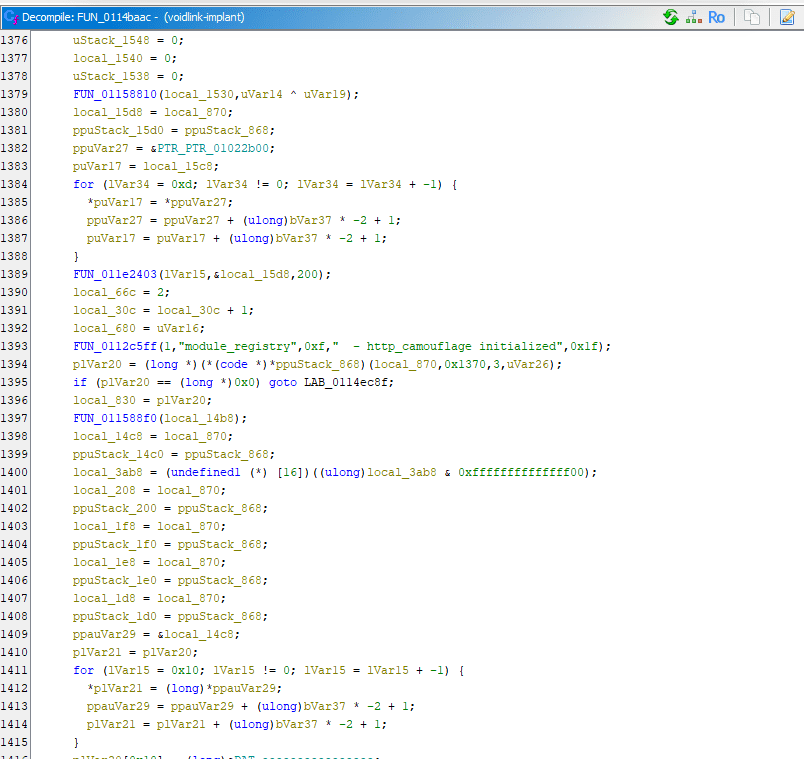
VoidLink employs a modular architecture where each component operates as an independent plugin within a shared registry framework, allowing the implant to adapt its capabilities based on the target environment and deployment context.
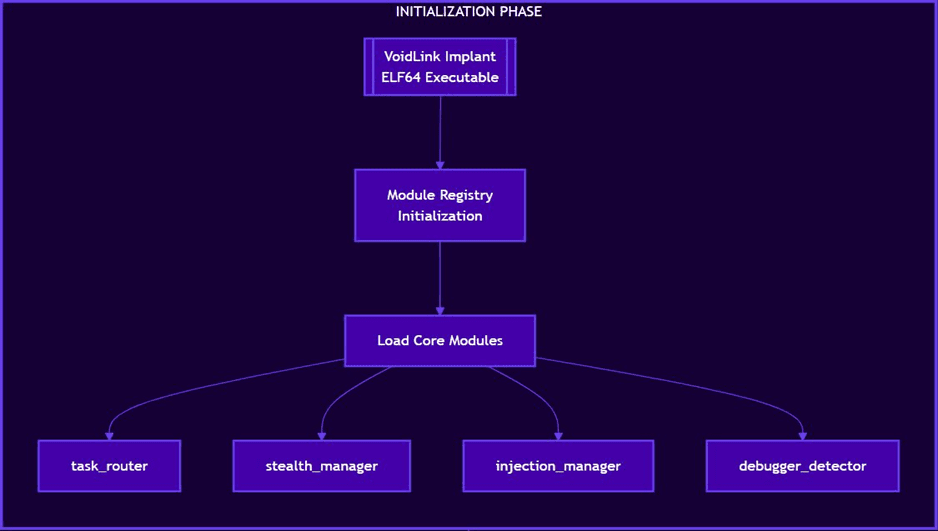
Execution triggers initialization of the module registry, subsequently loading four core components: the task router for command distribution, the stealth manager for evasion, the injection manager for code execution, and the debugger detector for anti-analysis.
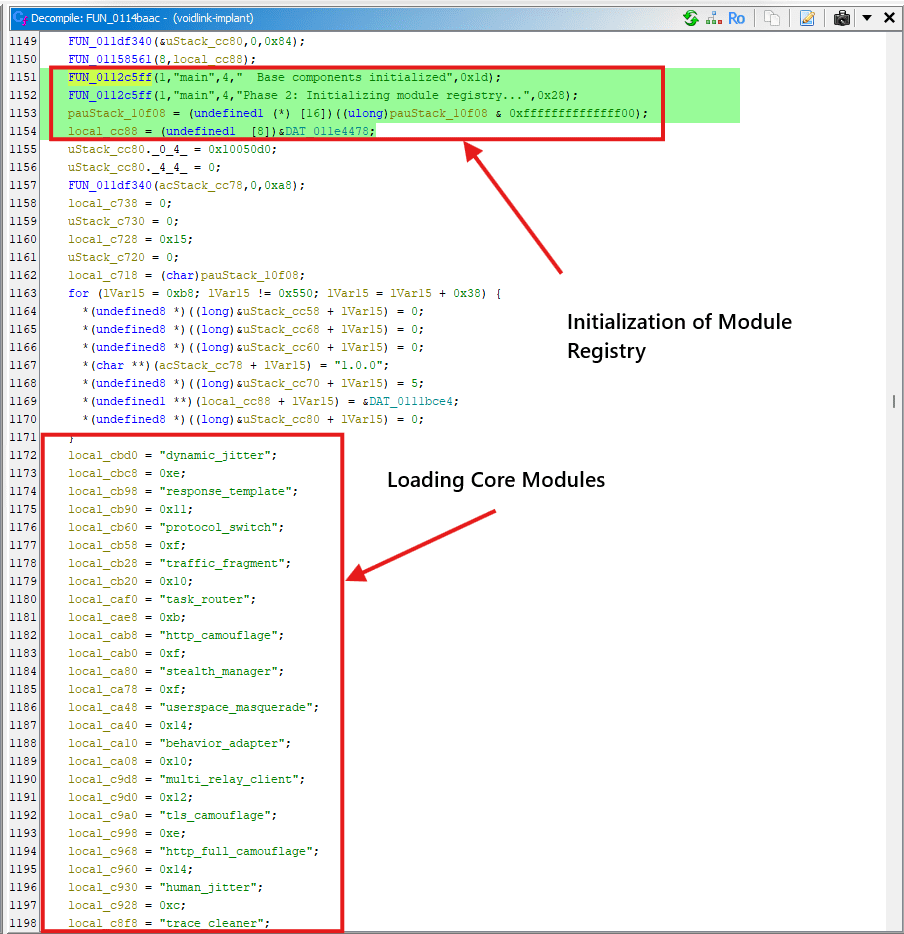
Intelligent Environment Detection
VoidLink conducts detailed host profiling before activating any operational capabilities, identifying the execution context and determining which stealth and exploitation mechanisms are applicable to the target environment.

The malware probes for cloud metadata APIs (AWS, GCP, Azure, Alibaba, Tencent), container environments (Docker, Kubernetes), and security posture (EDR/AV detection, kernel version). This intelligence drives adaptive behavior, choosing stealth mechanisms based on what it discovers.
Multi-Cloud Credential Harvesting & Environment Fingerprinting
VoidLink doesn’t just target one cloud provider it goes after them all. The implant actively searches for and exfiltrates credentials from multiple sources:
Cloud Environment Variables:
- Amazon Web Services (AWS) – AWS_ACCESS_KEY, AWS_SECRET_ACCESS_KEY
- Google Cloud Platform (GCP) – GOOGLE_CLOUD_PROJECT, GOOGLE_CLOUD_REGION
Local Credential Stores:
- SSH Keys – /root/.ssh/id_rsa, id_ecdsa, id_ed25519, and known_hosts
- Git Credentials – .git-credentials files
- Shell History – .bash_history, .zsh_history for credential leakage
- Browser Credentials – Stored passwords and session data
Kubernetes Secrets:
- Service account tokens from “/var/run/secrets/kubernetes.io/serviceaccount/”
- Namespace information for lateral movement context
Cloud Fingerprinting:
- Alibaba Cloud & Tencent Cloud – Metadata API queries for environment identification
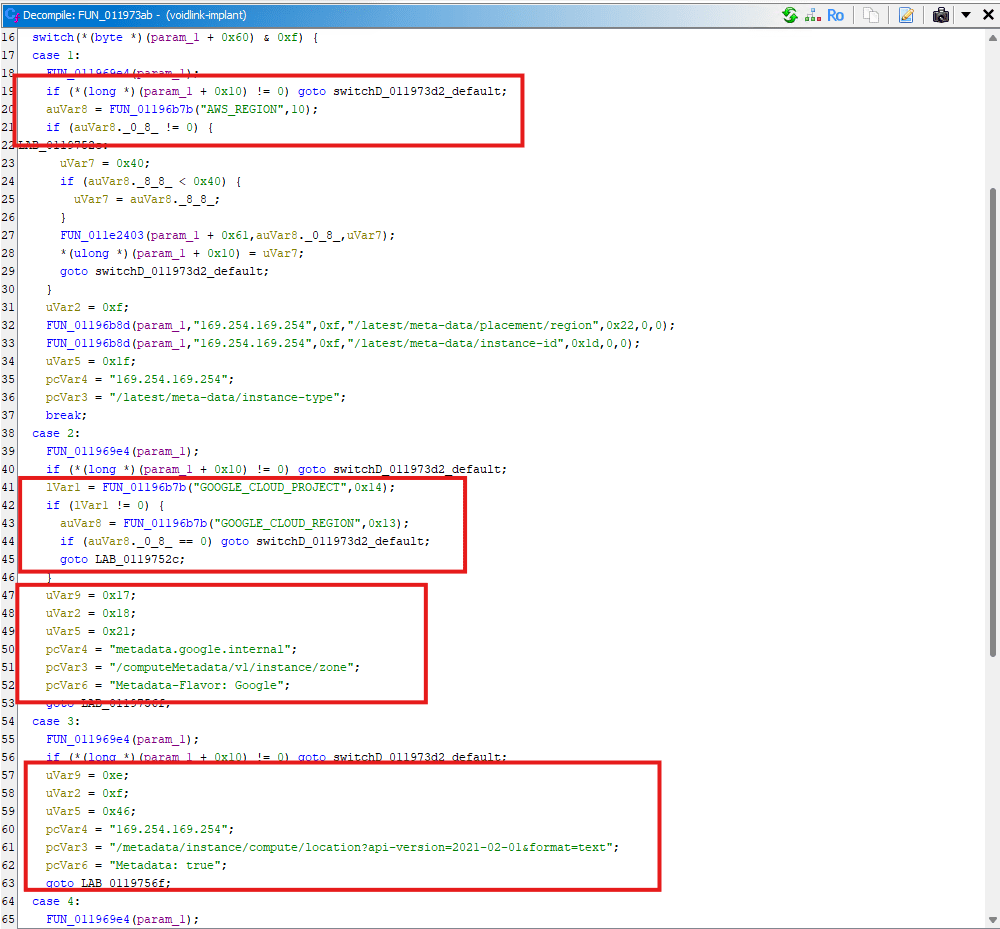
VoidLink queries cloud metadata APIs at 169.254.169.254 (AWS, Azure, Alibaba) and provider-specific endpoints (metadata.google.internal, metadata[.]tencentyun[.]com) for environment fingerprinting. The implant retrieves:
- Region and availability zone
- Instance ID and instance type
- Cloud provider identification
This reconnaissance enables VoidLink to adapt its behavior based on the target environment – selecting appropriate stealth mechanisms and persistence methods for each cloud provider. Notably, the implant does not query the AWS IAM security-credentials endpoint “/latest/meta-data/iam/security-credentials/<role-name>”, meaning it relies on environment variables rather than instance role credentials for AWS access.
Container Escape & Kubernetes Exploitation
VoidLink performs runtime detection across Docker, Podman, and Kubernetes container environments. When a container boundary is identified, the implant loads dedicated escape plugins from the module registry to attempt privilege boundary violations:
docker_escape_v3 – Exploits container misconfigurations to access the host system
k8s_privesc_v3 – Escalates privileges within Kubernetes clusters
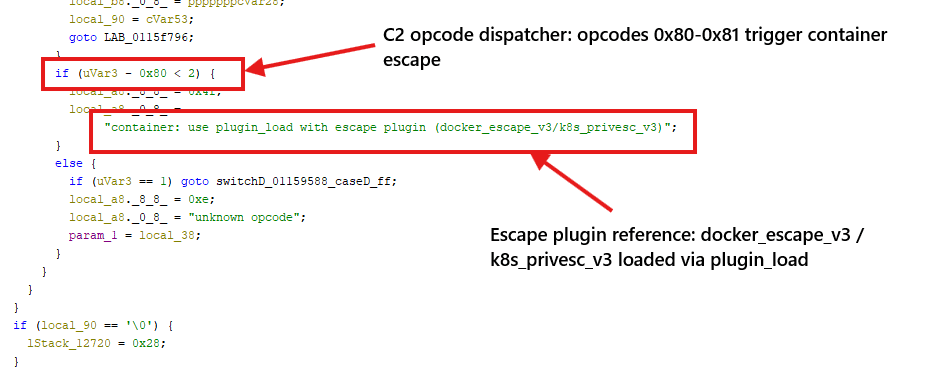
The malware specifically targets Kubernetes service account tokens stored at /var/run/secrets/kubernetes.io/serviceaccount/. These tokens can provide cluster-wide access, allowing lateral movement across containerized workloads.
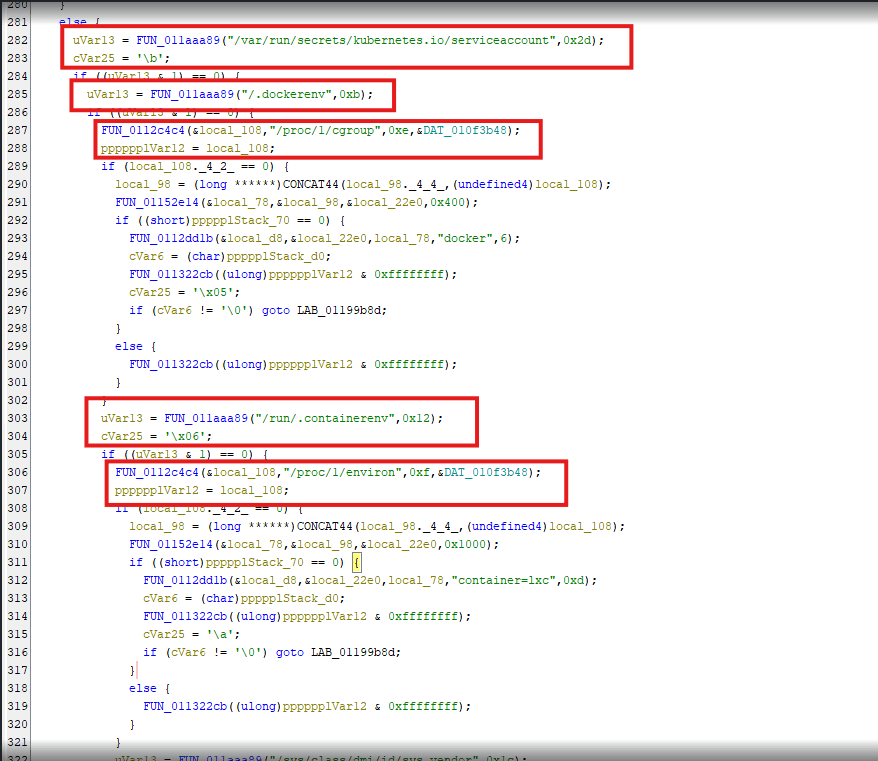
Kernel-Level Rootkit Capabilities
Perhaps the most technically impressive aspect of VoidLink is its adaptive rootkit functionality. The malware deploys different stealth mechanisms based on the detected kernel version:
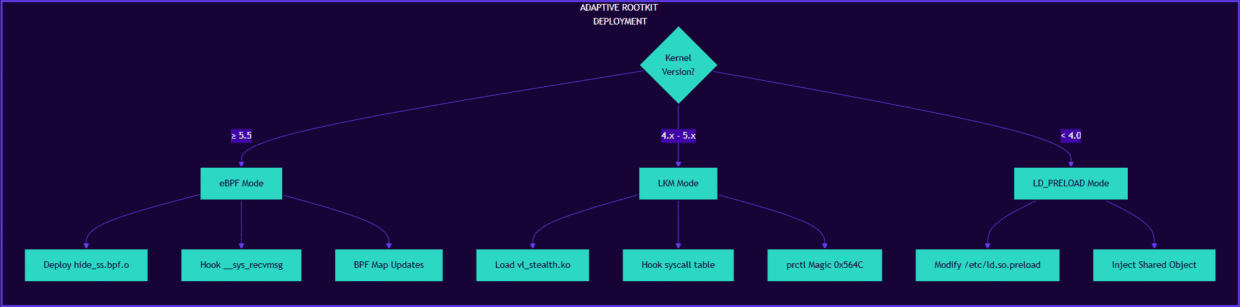
- Kernel ≥ 5.5: eBPF Mode – Modern stealth using hide_ss.bpf.o for system call interception
- Kernel 4.x – 5.x: LKM Mode – Loadable kernel modules (vl_stealth.ko, stealth_netstat.ko)
- Kernel < 4.0: LD_PRELOAD Mode – Userland hooking via shared object injection
Command and Control Infrastructure
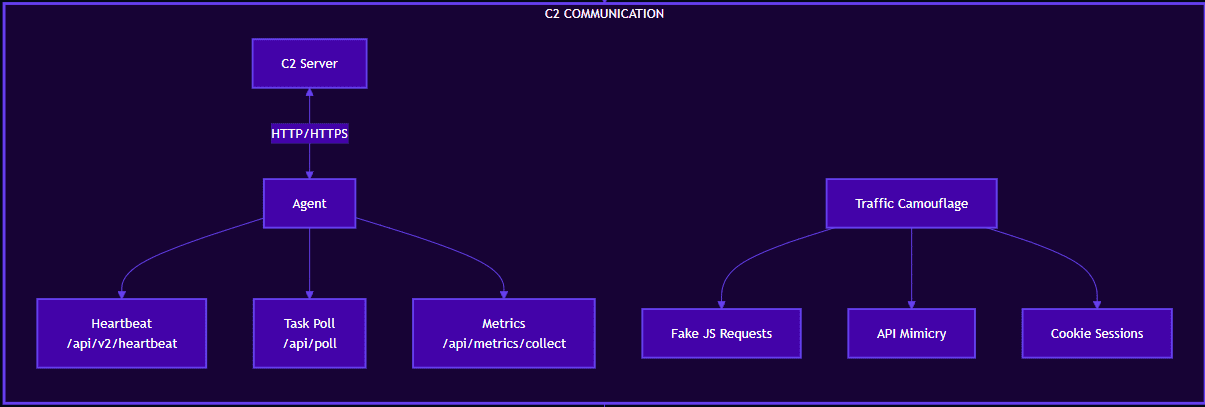
AES-256-GCM encryption for all C2 communications
- HTTP/HTTPS protocol camouflage with legitimate-looking API endpoints
- Traffic camouflage: Fake JS requests, API mimicry, cookie sessions
We identified a hard-coded C2 IP address: 8.149.128[.]10
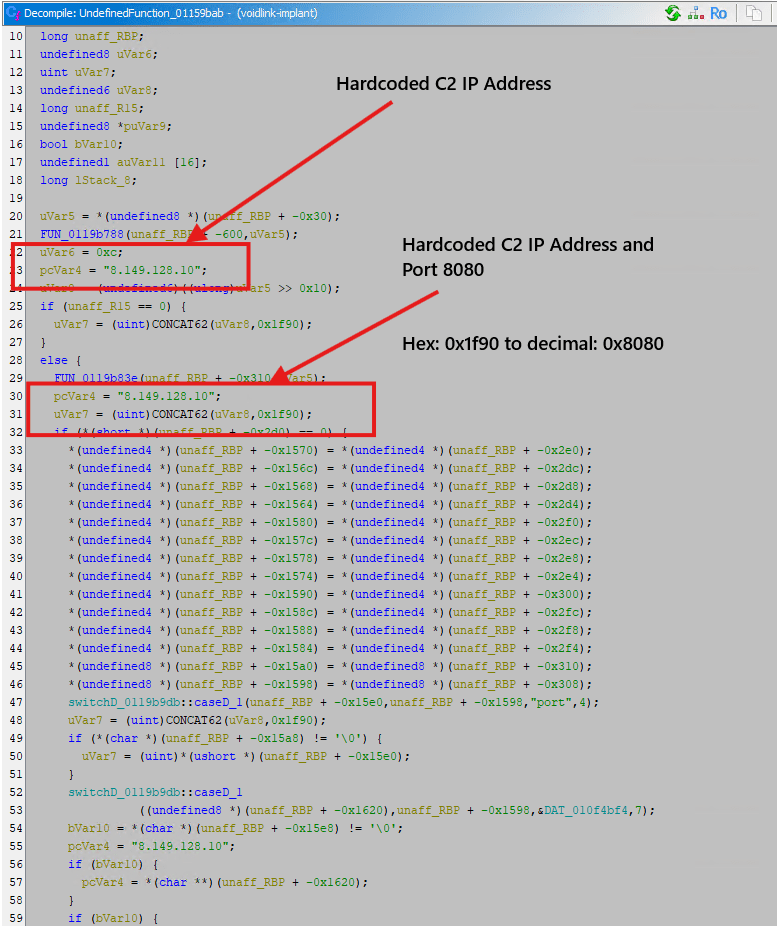
The rootkit exposes a command interface that allows operators to dynamically hide specific ports, processes, and files from forensic tools during operations, providing selective concealment rather than blanket hiding.
AI-Powered Malware Development
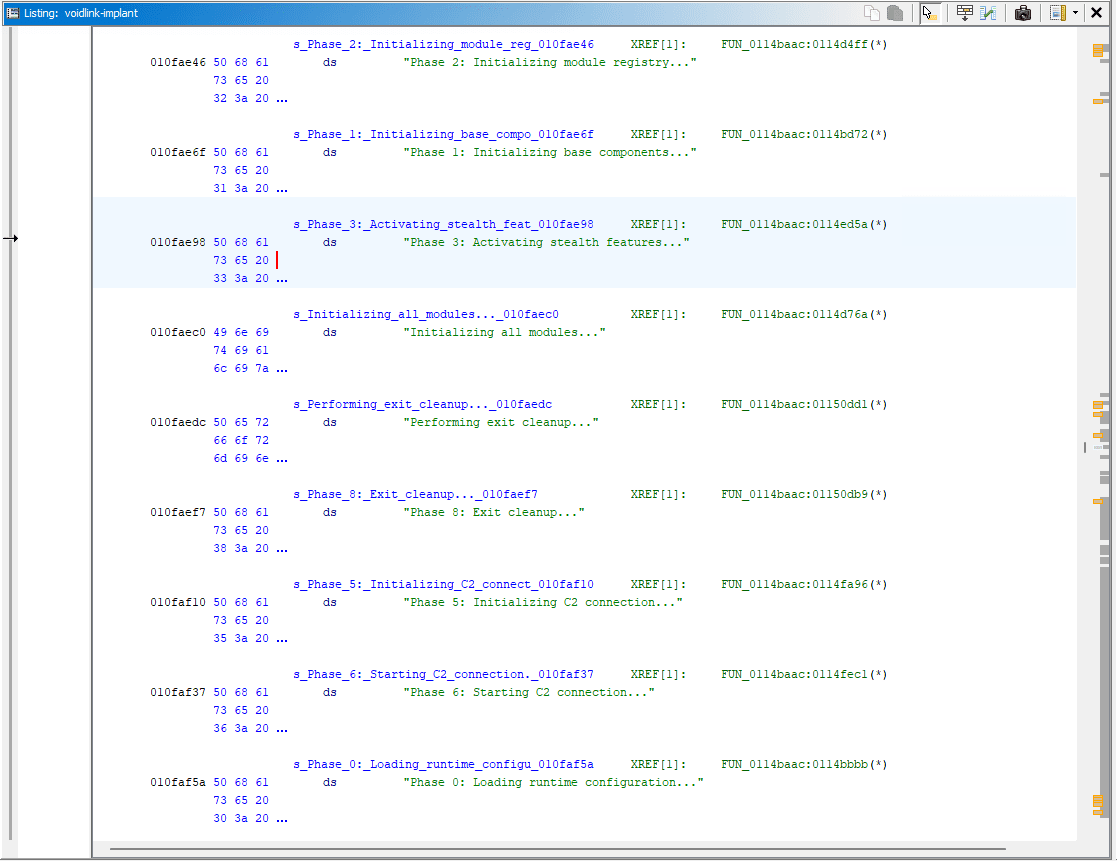
During analysis, we identified a phasing routine embedded in the binary’s initialization sequence, with labelled phases numbering up to 8. Phase 7 is absent from the sequence entirely, and Phase 5 is assigned to two distinct functions. Combined with verbose debug logging and structured documentation left in the production binary, these artefacts are consistent with LLM-generated code produced across separate prompts without enforced continuity between outputs.
Another indicator is excessive use of the equals character. Generated code sometimes adds multiple equals characters for comments, as shown in the image below. Using another pattern-matching script, I identified more potential indicators embedded in the binary that follow the same pattern.
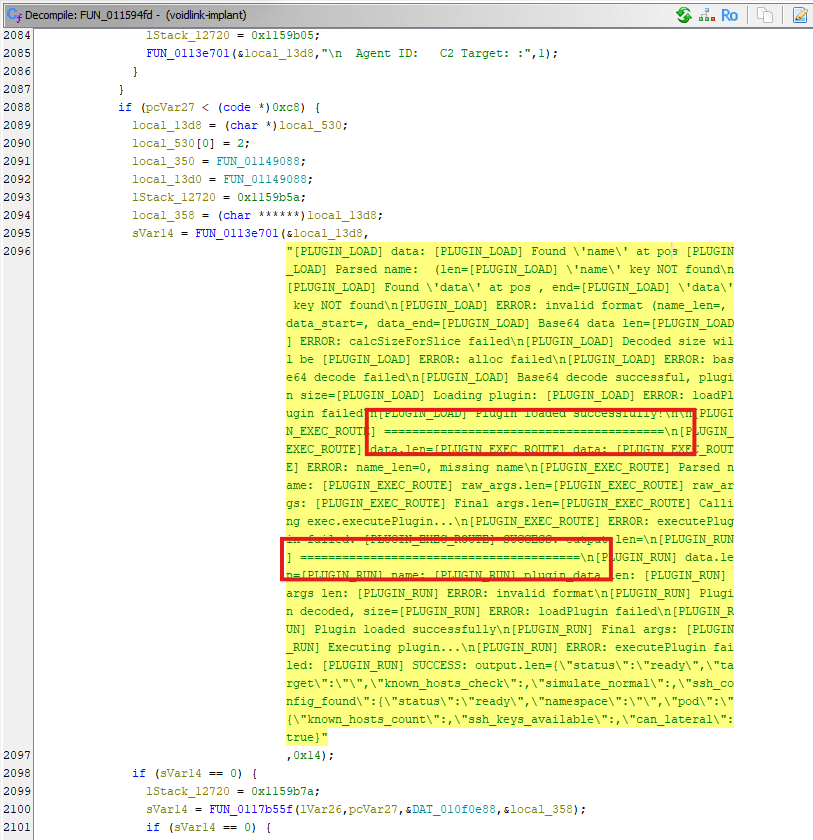
This leads me to believe there is little oversight over the development of the generated implants.
Professional malware developers typically:
- Use minimal or cryptic logging
- Avoid structured documentation in code
- Prioritize stealth over readability
- Strip debug information
VoidLink exhibits the opposite pattern:
- Verbose, descriptive phase labels
- Complete initialization sequence documentation
- Debug logging left in production binary
- Formal status messages (“successfully”, “initialized”, etc.)
Conclusion
VoidLink is a fully functional Linux implant that covers the key requirements for a sustained intrusion cloud credential harvesting, container-aware lateral movement, adaptive kernel-level stealth, and encrypted C2 communications. It targets five major cloud providers, escapes container boundaries, and hides its presence from standard forensic tools.
What sets it apart is how it was built. The “Phase X:” labels, verbose logging, and structured documentation embedded in the binary are consistent with LLM-generated code. Professional malware developers strip this kind of artifact out. Its presence in a production implant suggests the author relied heavily on an AI coding agent with little manual cleanup.
This matters because VoidLink is not a proof of concept. It is a deployable implant with real C2 infrastructure behind it. The barrier to producing this level of capability has dropped. Defenders should expect to see more implants built this way functional, modular, and assembled faster than traditional development allows.
Indicators of Compromise

Rhys is a Threat Researcher at Ontinue. Rhys started his career in IT, as a technician, which is where he discovered the world of cybersecurity. He ultimately decided to complete his degree in cyber and then landed his first role as a SOC analyst in 2021.
He said that what interests him the most about security is malware. He loves analyzing it and breaking it down to uncover its capabilities.